Early Stages DC

Early Stages is an evaluation center for children aged 2 to 5 years. They identify developmental delays and disabilities in children. Early Stages provides evaluations for DC children who are not in school or who are homeschooled, and children living outside of DC if they attend a private school or child care center in DC.

Refer a Child
Anyone may refer a child between the ages of 2 years and 5 years to Early Stages for a screening. For younger children, refer to Strong Start DC.

Early Stages Workshops
Early Stages offers free parent and professional workshops on many early childhood topics. Organizations may contact [email protected] to book group workshops. 

Click here to learn more.

Maryland Must Focus on its Childcare Workforce

Maryland Must Focus on its Childcare Workforce

By Bob Buchanan + Joanne Hurt

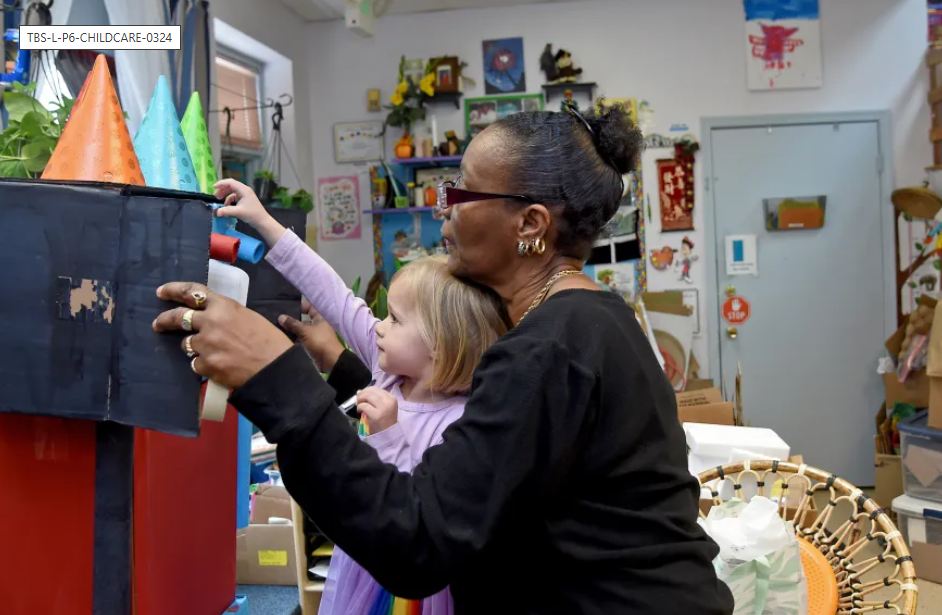
This recent article from The Baltimore Sun takes a closer look at the systemic challenges facing Maryland’s early childhood education sector. Highlighting the ongoing issues of low provider compensation, high turnover, and the broader economic strain on working families, the piece explores what is needed to stabilize the workforce and ensure sustainable, high-quality care across the state.

Return to Wonders Community Resource Page.

The Basics – Montgomery County

The Basics logo

The Basics

The Basics is a FREE program in Montgomery County, Maryland. The Basics campaign consists of five evidence-based parenting and caregiving principles that promote high-quality cognitive and social-emotional development among children 0-5.

Based on these five pillars, The Basics campaign supports community-level initiatives to improve early childhood outcomes, including kindergarten readiness. The Basics provides handouts, videos, and implementation guides to help communities teach parents and caregivers about the five pillars and their importance to children’s growth and learning. Click here for The Basics.

Return to Wonders Community Resource Page.

Safe Space Policy

Wonders Safe Space Policy

Wonders creates classroom communities that are welcoming, respectful, and equitable. This philosophy extends to the families in our programs, as we actively cultivate connection between home and school.

The purpose of the Safe Space Policy is to ensure our services remain accessible to families who need them and to preserve the wellbeing of our staff and the children in our care, while complying with the law. To accomplish these goals, we believe it is essential to provide clear protocols for staff in case of immigration or other law enforcement actions at Wonders locations. These protocols are not intended to interfere with lawful federal immigration enforcement and are not political in nature.

Nurturing New Moms

Nurturing New Moms

By Rebecca Gale

Wonders was featured in an article written by journalist, Rebecca Gale, “Nurturing New Moms: Child Care Centers are Becoming a New Frontier for Postpartum Support,” which was published on page 172 of the May/June issue of Bethesda Magazine. The article highlights the recent post-partum training Wonders Early Learning educators received by Postpartum Support International (PSI), to provide Wonders educators with insight on how to recognize signs of postpartum mood disorders and provide resources that can be shared with families. Liza Pringle, Wonders Early Learning Curriculum and Instruction Specialist, noted, “We can take this on. Parents can know they aren’t alone. We just need to be informed so we know the next steps to give them help.

Return to Wonders Community Resource Page.

Community Newsletters

Keep in Touch, Stay Informed

2026 Community Newsletters

2025 Community Newsletters

2024 Community Newsletters

2023 Community Newsletters

2022 Community Newsletters

Helping Children Learn to Self Regulate

Helping Children Learn to Self Regulate

The first two years of life is an amazing time of growth and change, both physically and cognitively. Babies experiment with and learn from the environment around them. Beyond physical, thinking, and language tasks, babies are learning about social and emotional tasks. Starting in the earliest months of life, babies have the capacity to experience peaks of joy and excitement and also feel fear, sadness and anger. Research has also shown that children’s ability to effectively manage their full range of emotions—also known as self-regulation—is one of the most important factors for success in school, work and relationships into the long-term.

By teaching skills around social emotional learning we are able to empower our youngest children to better deal with their own emotions. Social emotional learning is key to every child’s ability to manage feelings and to interact successfully with others. There is growing evidence that self-regulation can be taught in the classroom (Blair & Razza 2007; Diamond et al. 2007). Let’s look at some strategies from NAEYC for doing so.

  • Teach self-regulation to all children, not just those thought to have problems. All young children benefit from practicing deliberate and purposeful behaviors, such as repeated switching from one set of rules to another or resisting the temptation to function on autopilot.
  • Create opportunities for children to practice the rules of a certain behavior and to apply those rules in new situations. When children are constantly regulated by adults, they may appear to be self-regulated, when in fact they are “teacher regulated.” To be able to internalize the rules of a certain behavior, children can practice them in three ways: follow the rules, set and monitor  the rules and finally apply the rules to their own behavior.
  • Offer children visual and tangible reminders about self-regulation. Learning to regulate one’s own behavior is in many ways similar to learning other competencies, such as literacy or numeracy.
  • Make play and games important parts of the curriculum. Not only should play and games not be pushed out of the classroom to make room for more “academic” learning, they need to be taken very seriously. Children learn self-regulation best through activities in which children—and not adults—set, negotiate, and follow the rules. These include make-believe play as well as games with rules.

Through thoughtfully prepared curriculum around social emotional learning, Wonders gives children the opportunity to enhance their self regulation skills. We recognize that each child is different and develops differently from their peers. That is why we believe in developmentally appropriate guidance for children.

It’s easy to asses when children grow physically but how can we tell if a child is learning to self regulate?  A study from Vanderbilt University identified these six cognitive skills as those that are improved upon with growing self regulation.

  • Attention focusing—the capacity to attend to and sustain focus on a learning task.
  • Inhibitory control—the ability to suppress inappropriate off-task responses to distracting stimuli in a classroom environment.
  • Patience—the ability to wait when required by a learning task and not respond impulsively or prematurely.
  • Attention shifting—the ability to shift focus appropriately within a given learning task and from one task to another as situations demand.
  • Organizing skills—the ability to follow directions, engage in planning, and organize sequences of behavior.
  • Working memory—the ability to temporarily store and manage the information required to carry out a task.

All these learned skills lead to the emotional health and success of a child. Children with strong self-regulation skills, empathy, and social skills are more likely to be successful in school. They are more likely to feel connected to both adults and other children. They are better able to struggle, can deal with mistakes and moments of sadness, and are better able to stand up for themselves and others. These children are more likely to develop resilience, self-control, and self-efficacy – all important life-long skills.

Photo by Japheth Mast on Unsplash

Maryland ChildLink

ChildLink

ChildLink is an information and referral service for families with young children. Callers may receive simple referrals, consultation on child development or parenting issues, or linkages and follow up for families presenting more complex or at-risk situations which require early intervention services. ChildLink also assists families and providers in accessing mental health consultation on-site in child care programs. Click here for ChildLink

Return to Wonders Community Resource Page.

Privacy Settings
We use cookies to enhance your experience while using our website. If you are using our Services via a browser you can restrict, block or remove cookies through your web browser settings. We also use content and scripts from third parties that may use tracking technologies. You can selectively provide your consent below to allow such third party embeds. For complete information about the cookies we use, data we collect and how we process them, please check our Privacy Policy
Youtube
Consent to display content from - Youtube
Vimeo
Consent to display content from - Vimeo
Google Maps
Consent to display content from - Google